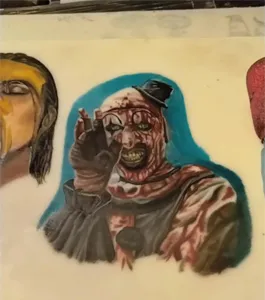
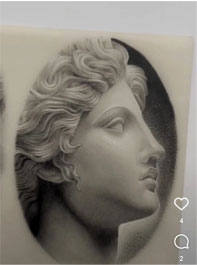
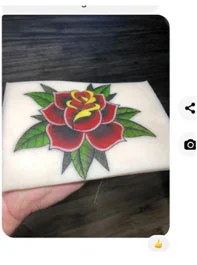
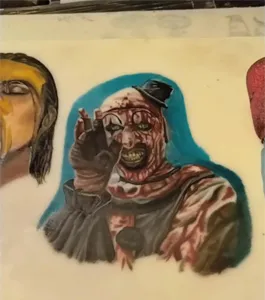
Whether you're a budding tattoo artist or a seasoned professional looking to refine your skills, fake tattoo skin is an essential tool. Designed to mimic real skin, it provides a risk-free way to perfect your technique before working on live clients. This guide will walk you through everything you need to know about using fake tattoo skin effectively, from preparation to execution. (Images below done on Wicked Skins).
For premium fake skin for tattoo practice , visit our shop.

Why Use Fake Tattoo Skin for Practice?
Fake tattoo skin offers a realistic texture, Wicked Skin mimicks the elasticity and ink absorption of human skin. It’s ideal for mastering everything from shading to linework, giving you the confidence to create stunning tattoos on real clients.
Over the past two decades, the tattoo industry has experienced remarkable advancements, and tattoo practice skin is no exception. Wicked Skins introduces the first ultra-realistic tattoo practice skin, designed to simulate the diverse characteristics of human skin. This innovative product features two distinct sides: beginners can start on the beveled side, which helps them master the fundamentals of proper technique and avoid overworking the skin. Once proficient, they can progress to the second side, which replicates less absorbent, more elastic skin with 30% greater toughness, mimicking areas of the human body.
This breakthrough innovation allows tattoo artists to refine their skills and explore intricate realism and layering techniques with results that closely mirror those achieved on human skin. As new advancements continue to emerge, the tattoo industry remains an exciting and promising career path for aspiring professionals.
We're working on a Free Video of Tattooing Art the Clown - Check back soon! or drop us an Email requesting a reminder!
Preparing Your Tools
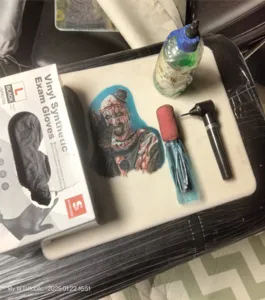
- Tattoo Machine: Choose a rotary / Pen Style Machine.
- Tattoo Needles: Use different types (e.g., liners, Magnums) for varied effects.
- Inks: Practice with professional tattoo ink to replicate real-world results. (our pref: World Famous Ink)
- Gloves: Always wear disposable vinyl gloves for hygiene.
- Tattoo Stand: A flat, soft, stable surface to hold your practice skin in place.
- Cleaning Supplies: Coconut Oil (Wicked Skin) or Baby Oil / Vaseline (others) and paper towels for easy cleanup.
Setting Up the Practice Skin
- Secure the Skin: Lay the fake tattoo skin flat on your workspace or wrap it around a curved surface to simulate tattooing on body parts.
- Stencil Placement:
- Use tattoo transfer paper to apply your design.
- Ensure the stencil dries completely before starting.
- Lighting and Ergonomics:
- Position your light source for minimal shadow interference.
- Maintain a comfortable posture to avoid strain during practice.

Tattooing Techniques for Beginners
Line Work
Use light pressure to avoid overworking the synthetic skin. Practice steady hand movements to create smooth, consistent lines.
Shading and Gradients
Adjust your needle depth and speed for softer transitions. Experiment with circular motions for seamless shading.
Color Packing
Start with smaller areas to learn how to saturate evenly. Layer the colors gradually to avoid ink pooling.
Needle Depth Control
Maintain consistent needle depth to mimic real-skin penetration without tearing the practice skin.
Tips: Common Mistakes and How to Avoid Them
- Overworking the Skin
- Excessive needle passes damage the synthetic surface. Practice light strokes and avoid repeating over the same area too much.
- Poor Stencil Placement
- Stencils smudge, making the design hard to follow. Let the stencil dry completely before starting and use a stencil fixative if necessary.
- Ink Splattering
- Excess ink leads to blotchy designs. Dip your needle lightly and wipe frequently during tattooing.
- Inconsistent Linework
- Uneven lines result from shaky hands or inconsistent pressure. Practice controlling your machine’s speed and maintaining steady hand movements.
Recommended Products for Tattoo Practice
- Wicked Skins – Single 11 x 15" Large Realistic Fake Tattoo Skin for Beginners: Offers excellent needle feedback and ink absorption.
- Large 11 x 15" 5-Pack for Professionals: Designed for advanced techniques like shading and color realism.
- Any order of Wicked Skins (regardless of the amount) unlocks our Pro Realism Video Tutorials for life
Detailed Comparisons of Different Fake Tattoo Skin Brands
- Amazon Skins: Found to be hard and similar to tough vinyl or hard rubber eraser material. Not realistic - Application is more like engraving than tattooing.
- Reel Skin: Found to be very thin but soft and closer to human skin than Amazon skins yet doesnt share the absorbency or elasticity parameters of human skin. Lining becomes too easy compared to human skin. Shading appears peppered and takes too many passes compared to human skin. Light graywash that is learned will then be too dark on human skin lacking values and smooth gradients. Somewhat pricey.
- Pound of Flesh: Found to be thick yet lacking realistic absorbency. Very expensive.
- Wicked Skin: Developed by realism artists to perform like human skin. Two sides covering the wide range of human skin. Side 1:easily overworked. You must learn to apply ink in saturation with a strategic technique rather than abrasively. Side 2: You must slow your hand and become more accurate in create a slight back pressure off the needles to take the ink into the skin. Lining with RL force you to have to 'hook' in lightly to create a consistent saturated line. If you can master Wicked Skin you will have no issues on human skin. The only skin for advanced techniques such as multi-layering , color-toning in the skin. Priced lower than Reelskin and Pound of Flesh yet larger at 11 x 15" x 1/4"thick. Comes with full video tutorials covering every aspect,application and sanitizationbeginner thru to advanced realism.
Practical Tips: Applying Stencils and Wiping Off Ink
- Amazon Skins: Apply stencil with either white deodorant or a pro-level stencil solution such as Elektrum. Wait 24 hours - some blur, loss, fading will occur that causes stencil to be hard to see. Simple stencils work best with at least 11 round size lines. Intricate detail and fine line stencils will not work effectively. Use baby oil or vaseline to remove ink. Skins stain easily.
- ReelSkin Best with a pro-levelstencil solution in very thin layer to where its tacky. Apply and remove within 10 seconds after applying light pressure. Allow 24 hours to dry. Remove ink with baby oil or vaseline.(Similar results with Pound of Flesh skins). Some blur and fading will occur as stencil dries. Large and medium line weight stencils work best.
- Wicked SkinApply stencil by first lightly sprinkling a small amount of baby powder onto skins and rub in until skin is smooth feeling. Then apply a pro-level stencil solution (Elektrum is what is used for testing) a few drops and rub into skin until a thin glaze-like layer appears. Apply the stencil for 10 seconds with light pressure of hand. Remove stencil and let dry over 24 hours. Remove ink spatters with coconut oil (from any grocery store). Coconut oil is used as a synthetic plasma similar to human skin. By rubbing with finger tips into your tattoo it will remove any ink that isn't legitimately penetrated/ pinched into skin thus giving you a real-world assessment of what your tattoo would look like in a few months if it were on human skin. Human skin sheds epidermis and any ink that isn't sufficiently tethered into the skin. Coconut oil was developed with the skins to cause this same effect but results are instant and artists won't have to wait 2 months to see results of their work - making Wicked Skins extremely effective for beginners. Side 1: Overworking training. Side 2: Proper application of ink - otherwise coconut oil will wipe it out. The first calibrated precision tool in fake tattoo skin.
Maintenance and Cleaning:
Keeping your fake tattoo skins clean and in good shape will only require a proper cleaning with a light soap (not a green soap that is too stringent and causes over drying.) and a very thin layer of vaseline to stop from overdrying. You will want them in a display case or picture frame to stop dust from sticking and air from drying them out. Another trick is to cover them with a clear art resin to forever preserve them. However you decide to keep your fake skins is up to you but be aware that dust and air can dry them out over time. Sun can cause fading if they fall into direct sunlight.
Reviews:


- BWild "These Skins are amazing. Very realistic effect on skin, sensitive to being overworked which I really like. So far the best practice skins I have ever used!"
- Ian Garner-LeRose "Didn't Take Long. Good Skins!"
- Kenneth Meador "Hands down the best I've used."
- Frank Panetta "Unsurpassed in their fine-line stencil application straight through to intricate detail. Ink goes in exactly like you'd expect from client skin."
Conclusion
Mastering tattoo techniques on fake tattoo skin is a vital step in your journey as a tattoo artist. By preparing your tools, setting up your workspace, and practicing the right techniques, you’ll build the confidence to create stunning designs on real clients.
Ready to elevate your skills? Explore our collection of premium tattoo practice skins and take the next step in your tattooing career today!