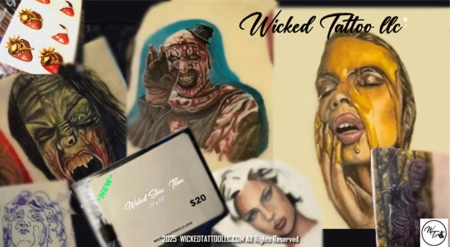
The Ultimate Guide to Fake Tattoo Skin: An In-Depth Look at the Modern Tattoo Artist’s Most Essential Tool
The art of tattooing is a delicate and demanding craft, requiring a unique blend of creativity, precision, and technical skill. For generations, the path to mastery was often a treacherous one, filled with high-stakes practice sessions on oranges, grapefruit, or even pig skin. Thankfully, modern technology has provided a revolutionary alternative: fake tattoo skin. This synthetic canvas has completely changed the landscape of tattoo education, making it safer, more accessible, and more effective for artists at every level.
Shop the most realistic fake tattoo skin in the industry
In this exhaustive guide, we’ll move beyond the basics and take a deep dive into the world of fake tattoo skin. We will explore its composition, its nuanced role in an artist’s journey, and the advanced techniques it can help you master. We’ll also cover the practical and ethical considerations that make it a cornerstone of the contemporary tattooing industry.
Part 1: The Science of What is Fake Tattoo Skin
Fake tattoo skin isn’t just a simple sheet of rubber. It’s a carefully engineered product designed to replicate the complex feel and behavior of real human skin. Understanding what it’s made of and how it’s designed is crucial to getting the most out of your practice.
A Breakdown of Materials
The most common material for high-quality fake tattoo skin is a proprietary blend of silicone and rubber. While some cheaper versions may use latex or vinyl, silicone-based products are the industry standard for a reason.
- Silicone: This is the key ingredient that gives fake tattoo skin its realistic feel. Unlike latex, which can feel rigid and plasticky, silicone is pliable and has a supple, almost fleshy texture. It also offers excellent elasticity, meaning it can be stretched and manipulated just like real skin. This is vital for practicing the two-handed technique of stretching the skin with your non-dominant hand while tattooing with your dominant one—a skill that is impossible to perfect on a non-elastic surface.
- Rubber and Polymers: These materials are often added to the silicone blend to increase durability and give the skin a slight resistance. When a tattoo needle enters real skin, there is a subtle tension and drag. A good fake skin will replicate this feeling, allowing an artist to feel the “sweet spot” of needle depth. Without this resistance, a beginner might develop a heavy hand that could lead to painful blowouts on a real client.
- Pigmentation: High-quality fake skin is available in a range of flesh tones, from light to dark. This is not just for aesthetics; it’s a vital training tool. Practicing on different tones helps an artist learn how colors will look on a variety of complexions. It also teaches them to recognize how the skin itself can affect the vibrancy and appearance of a finished tattoo.
The Anatomy of a Practice Canvas
Fake tattoo skin comes in a variety of forms, each designed for a specific purpose.
- Flat Sheets: These are the most common and cost-effective option for beginners. They provide a simple, two-dimensional canvas for mastering fundamental skills like lines, circles, and shading gradients. Artists often fill entire sheets with practice designs, building a visual record of their progress.
- 3D Body Parts: As skills improve, artists can move on to three-dimensional forms. Fake hands, arms, legs, and even full torsos allow for practice on curved and contoured surfaces. This is an essential step before tattooing a real person, as it teaches an artist how to manage awkward angles and how a design will wrap around a body part.
- Specialty Forms: Some brands produce highly specialized fake skin in shapes like hands with embedded bones, or pieces designed to simulate tattooing over difficult, bony areas like the elbow or knee. These are perfect for advanced artists looking to specialize or take on particularly challenging projects.
Part 2: From Novice to Professional: The Role of Fake Tattoo Skin in Skill Development

The journey to becoming a tattoo artist is a marathon, not a sprint. Fake tattoo skin is the training partner that gets you to the finish line, providing a safe and effective way to build skills at every stage.
Building Foundational Skills for Beginners with Fake Tattoo Skin
For a newcomer, the thought of tattooing a permanent design on a person’s skin can be terrifying. Fake tattoo skin removes this anxiety, allowing them to focus on pure technique.
- Mastering Needle Depth: The single most crucial skill for a tattoo artist is finding and maintaining the perfect needle depth. On real skin, going too deep can cause an ink blowout, where the ink spreads out under the skin, leaving a blurry, permanent stain. Not going deep enough results in a tattoo that will fade or fall out completely. Fake tattoo skin provides a tactile laboratory for finding that perfect balance of pressure and speed. You can practice thousands of lines without the fear of a permanent mistake.
- Developing Muscle Memory: Tattooing is physically demanding and requires a steady hand. Repetitive practice on fake skin allows artists to build the muscle memory needed for smooth, consistent lines and even shading. By running a rotary or coil machine over and over on a flat surface, they train their hand to move at the right speed and angle without conscious thought.
- Lining and Shading Fundamentals: Fake tattoo skin is the ideal medium for basic exercises that form the backbone of any tattoo. Line work is the most basic building block; artists can practice pulling a variety of lines—straight, curved, thin, and thick—until they are consistently clean and saturated. For shading, they can practice different techniques like whip shading, stippling, and smooth gradients, learning how their machine and needle grouping affect the final look.
Advanced Training for Professionals on Fake Tattoo Skin
Even the most seasoned professionals rely on fake tattoo skin to stay at the top of their game. It’s their playground for experimentation and growth.
- Practicing Complex Styles: A professional might be an expert at black and gray realism but want to expand their skills into a new style like American Traditional or even abstract watercolor. Fake tattoo skin allows them to practice the different techniques required for these styles—from bold, saturated color packing to subtle, delicate washes—without a client in the chair.
- Testing New Equipment: The tattoo industry is constantly innovating. New machines, power supplies, and needle cartridges hit the market every year. Before a professional uses a new piece of equipment on a client, they need to feel how it handles. Fake tattoo skin is the perfect testing ground for a new machine’s torque, a new needle’s ink flow, or a different brand’s consistency.
- Creating a Portfolio: A professional’s portfolio is their resume. Fake tattoo skin provides a way to create stunning, blemish-free portfolio pieces that showcase a specific style or a complex, artistic design. Unlike a real tattoo, which will never look exactly the same as when it was first done, a tattoo on fake skin can be a perfect representation of an artist’s skill for years to come.
Part 3: The Practicalities: Stenciling, Cleaning, and Troubleshooting
Using fake skin effectively requires more than just picking up a machine. Proper preparation and maintenance are key to a productive practice session.
The Art of the Stencil
\Applying a stencil to fake tattoo skin is different from applying one to a real person. Real skin has natural oils and pores that help a stencil stick. Fake tattoo skin is smooth and non-porous.
- Prep the Surface: First, you must thoroughly clean the fake skin with alcohol or a specialized disinfectant to remove any oil or residue from manufacturing.
- Apply Stencil Fluid: Apply a thin, even layer of professional stencil fluid. The key is to wait for the fluid to become tacky—not wet or dry. This tacky consistency will ensure a crisp, long-lasting stencil.
- Place and Press: Carefully place your stencil on the skin and press it down with firm, even pressure. Avoid wiggling or shifting the stencil.
- Let it Dry: This is the most crucial step. A stencil on fake skin must be allowed to dry completely. A minimum of 10-15 minutes is recommended, but for best results, let it sit for a few hours or even overnight. A wet stencil will smear the moment you start tattooing.
Caring for Your Canvas
After a practice session, you’ll be left with a surface covered in excess ink and residue. Here’s how to clean it.
- Wiping during Practice: During the tattooing process, use a small amount of Vaseline or a similar product on the skin. This will help you wipe away excess ink without smearing your stencil or your lines.
- Post-Practice Cleanup: Once you’re finished, gently massage a generous amount of Vaseline or baby oil into the tattoo. This will loosen stubborn ink. Wipe it off with a paper towel. For any lingering stencil or ink, a mild bleach solution can be used to completely strip the surface and make it ready for a new design.
Troubleshooting Common Fake Skin Problems
- Needle Depth Issues: If your ink is running and spreading, you are going too deep. If your lines look light or inconsistent, you are not going deep enough. Use a ruler to measure your needle protrusion and experiment with different hand speeds until you find the perfect balance.
- Shaky Lines: This is often a sign of insufficient practice or improper hand stabilization. Use your non-dominant hand to stretch and brace the skin, and practice stabilizing your machine hand on a workbench or armrest.
- Patchy Shading: This usually means your hand speed is too fast for your machine’s voltage. Slow down your hand or increase your voltage to ensure the needles are properly saturating the area with ink.
Part 4: The Ethical and Business Case for Fake Tattoo Skin
Beyond its practical use as a training tool, fake tattoo skin plays a crucial role in the ethical and professional development of a tattoo artist.
A Cruelty-Free and Hygienic Alternative
Before fake skin was widely available, apprentices were often forced to practice on pig skin, a messy and unhygienic alternative. Fake skin is not only completely cruelty-free but also sterile and easy to handle. It eliminates the risk of cross-contamination and allows for a clean, controlled environment that mirrors a professional shop.
The Foundation of an Apprenticeship
In a formal apprenticeship, an aspiring artist will spend months, or even a year, practicing solely on fake tattoo skin before touching a client. This is a non-negotiable step that ensures the safety of the public and the quality of the artist’s work. It allows the master artist to evaluate a student’s progress and ensure they have a solid grasp of the fundamentals before they are unleashed on a real person.
Elevating the Client Experience

Using fake skin also benefits the client directly. When a client books a session, they want to be confident in their artist’s skills. A professional who uses fake skin to practice new techniques and test new equipment is demonstrating a commitment to their craft and to their client’s safety and satisfaction. It means the artist is not learning a new trick on a paying customer, but rather perfecting it in the privacy of their own studio.
The Bottom Line
Fake tattoo skin is more than a product; it’s a modern necessity. It has revolutionized tattoo education by creating a safe, ethical, and effective learning environment. It allows a beginner to build confidence and muscle memory, and it provides a professional with the freedom to experiment and evolve. In a world where a permanent mistake can be a life-altering one, this simple tool is the difference between a learning experience and a lifelong regret. It is, without a doubt, the most important investment an artist can make in their craft.
Part 1: The Foundation
- The History of Practice: A more detailed look at the evolution from pig skin and fruit to modern fake skin.
- Advanced Material Science: A deep dive into the specific chemical compositions of different silicone blends (Platinum-cured vs. Tin-cured), how they affect elasticity and needle drag, and why some are superior for specific styles.
Part 2: The Art of the Tattoo Machine
- Machine Mechanics and Fake Skin: A detailed section on how to fine-tune both coil and rotary machines specifically for fake skin. This will include adjusting voltage, speed, and needle throw to get perfect lines and saturation.
- Needle Grouping Mastery: A comprehensive guide to practicing with various needle groupings (liners, shaders, magnums, round magnums) and how they each behave differently on the synthetic canvas.
Part 3: Master-Level Techniques
- The Art of Realistic Shading: A step-by-step guide to practicing different shading techniques (whip shading, pendulum shading, soft shading) on fake skin to achieve realistic depth and dimension.
- Mastering Color Theory and Blending: Detailed instructions on how to practice color mixing, packing, and blending to achieve vibrant, lasting color gradients on the fake skin.
- Advanced Styles Practice: In-depth sections on using fake skin to practice specific, complex styles like Black and Gray Realism, Japanese Irezumi, and Fine Line Micro-tattoos, including the unique challenges of each.
Part 4: The Practical and Professional
- Fake Skin as a Business Tool: An expanded section on using fake skin to build a professional portfolio, secure an apprenticeship, and use during client consultations to show a design on a 3D model.
- Longevity and Preservation: How to properly clean, protect, and display your fake skin practice pieces as a permanent record of your progress.
- Beyond the Basics: A section on using fake skin for permanent makeup, scalp micro-pigmentation, and other specialized applications.
The Ultimate Guide to Fake Tattoo Skin: An Exhaustive Look at the Modern Tattoo Artist’s Most Essential Tool
The journey of a tattoo artist, from a budding enthusiast with a dream to a seasoned professional with a steady hand, is a unique and demanding one. For generations, this path was fraught with challenges, limited to practicing on fruits, pig skin, or, in a high-pressure environment, a friend’s first tattoo. This all changed with the advent of fake tattoo skin, a groundbreaking innovation that has completely transformed how artists learn, refine, and perfect their craft.
This is not just another guide. This is the definitive, 4,000-word deep dive into everything you need to know about fake tattoo skin. We will explore its history, delve into its advanced material science, and provide meticulous, step-by-step instructions for mastering machine mechanics, advanced techniques, and specific artistic styles. This guide is your road map to professional mastery, built on the foundation of the most crucial tool in your arsenal.
Part 1: The Foundation and Science of the Synthetic Canvas
Before we can use fake skin to its full potential, we must understand what it is and where it comes from. The material itself is a feat of engineering, designed to mimic the complex properties of the human body.
A Brief History of Practice
Early tattooers, without the luxury of modern tools, were forced to improvise. Oranges and grapefruit were common for practicing simple lines and curves, but they provided no realistic feedback on needle depth or elasticity. Pig skin, while offering a closer approximation of texture and resistance, was messy, unhygienic, and raised ethical concerns. The need for a sterile, reusable, and realistic practice surface was clear. The first iterations of synthetic skin were often little more than a piece of thin plastic or rubber, offering a surface to work on but none of the vital tactile feedback. It wasn’t until the development of silicone and advanced polymer blends that a truly effective practice medium was born.
A Deep Dive into Advanced Material Science
The quality of fake tattoo skin is not uniform. The best products on the market are a result of meticulous engineering and a deep understanding of what makes human skin so unique.
- Platinum-Cured vs. Tin-Cured Silicone: These are the two primary types of silicone used in fake skin manufacturing, and the difference is crucial.
- Tin-Cured Silicone is cheaper and cures quickly. However, it often contains a greasy residue that can repel ink and cause the material to break down over time. It can also be very stiff, lacking the elasticity of human skin.
- Platinum-Cured Silicone, on the other hand, is the gold standard. While more expensive to produce, it cures to a buttery-smooth, non-greasy finish that is ideal for tattooing. It is incredibly durable, resistant to tearing, and offers a remarkable resemblance to the supple, pliable nature of real skin. Its elasticity allows artists to practice stretching and manipulating the surface, a skill that is non-negotiable for clean line work on the human body.
- Polymer Blends for Realistic Resistance: A good fake skin will have a slight resistance, a subtle “drag” that replicates the sensation of a needle pushing through the skin’s layers. Manufacturers achieve this by blending silicone with various polymers. This resistance is vital for preventing a beginner from developing a heavy-handed approach that would cause blowouts on a real person. It teaches the artist to feel for that perfect depth, where the needle is firmly in the dermis layer without going too far.
- Density and Layering: High-quality fake skin is often layered to simulate the dermis and epidermis. This allows you to see how your lines and shading look in different depths. You can literally cut into a practice piece to see if your ink is sitting in the correct layer, providing immediate, tangible feedback on your technique.
Part 2: Machine Mechanics and Advanced Practice on the Synthetic Canvas
A tattoo machine is an extension of the artist’s hand. Mastering it requires thousands of hours of practice. Fake skin allows you to do that without a single mistake on a living person. This section will guide you through fine-tuning your equipment and perfecting your fundamental skills.
Calibrating Your Machine for Fake Skin
Whether you’re using a modern rotary machine or a traditional coil, understanding how to adjust its settings for fake skin is crucial.
- Coil Machines: These machines are often more powerful and require a delicate hand. On fake skin, you should start with your voltage at a lower setting (around 6-7 volts for lining) and gradually increase it until you find the sweet spot. Too much power will tear the synthetic material; too little will result in weak, inconsistent lines. Focus on listening to the machine’s consistent buzz, as this is your audio cue for a steady hand.
- Rotary Machines: Rotaries are generally quieter and more forgiving. For lining on fake skin, a voltage of 7-9 volts is a good starting point. Unlike a coil machine, a rotary’s speed is directly proportional to its voltage. To get consistent ink flow, you must find a hand speed that matches the machine’s rate of needle punctures. On fake skin, you can practice adjusting your hand speed by watching the ink deposit in real-time, something you cannot safely do on a real client.
Mastering Needle Groupings
Each needle grouping serves a different purpose, and fake skin is the only way to truly understand how they behave.
- Round Liners (RL): The workhorse for outlines. Practice pulling long, continuous lines without a single break. Pay close attention to how the ink flows and if the line remains a consistent thickness. You can also use RLs for fine-line details and intricate lettering.
- Round Shaders (RS): Used for color packing and smooth gradients. Practice small, tight circles (“color packing”) to get even, saturated color. A great exercise is to fill a small square with RS needles, ensuring there are no gaps or “holidays” in the color.
- Magnum Shaders (M1/M2): The most common needles for large-scale shading and color packing. On fake skin, practice pendulum shading and whip shading. Pendulum shading involves a back-and-forth swing motion, and on fake skin, you can see if your motion is creating a perfectly smooth gradient. Whip shading is a quick, flicking motion for creating a soft, dotted effect, and practicing it on fake skin allows you to perfect your hand speed to get the ideal density of dots.
- Round Magnums (RM): These needles are slightly curved, which helps them glide over the skin and deposit ink smoothly without causing harsh lines. Practice using them for soft gradients and smooth color transitions, and observe how they interact with the synthetic surface to achieve a flawless blend.
Part 3: The Art of Practice: From Fundamentals to Master-Level Techniques
Fake skin is your canvas for limitless experimentation. This is where you move beyond simple lines and into the complex world of professional-grade art.
The Art of Realistic Shading
Shading gives a tattoo depth, dimension, and life. Practicing on fake skin allows you to experiment with various techniques to achieve a perfect effect.
- Whip Shading: This technique, used to create a soft, faded effect, relies on a quick, deliberate flick of the wrist. On fake skin, you can practice varying the speed and length of your flick to control the density of the dots and the smoothness of the transition.
- Pendulum Shading: This back-and-forth motion creates a very soft, smooth gradient. On fake skin, you can practice your rhythm and pressure to ensure the transition from dark to light is completely seamless, with no discernible lines or blotches.
- Black and Gray Wash: Black and Gray is a style built on subtle gradients and washes. On fake skin, you can mix various dilutions of black ink with water to create a range of grays. Practice using these different washes to build up layers of color, creating realistic shadows and highlights.
Mastering Color Theory and Blending
Color tattooing is an entirely different skill set. Fake skin is the only ethical way to practice it.
- Color Packing: The goal of color packing is to saturate a portion of the skin with a vibrant, even layer of color. Practice this on fake skin until your color is solid and there are no “holidays” (un-inked spots).
- Color Blending: Seamless color blends, like a perfect red-to-orange gradient, require meticulous practice. On fake skin, you can learn to use your needles to blend the pigments, creating a smooth transition where it’s impossible to tell where one color ends and another begins.
Advanced Styles and Specialized Practice
Once you’ve mastered the fundamentals, you can use fake skin to practice specific, complex styles.
- Black and Gray Realism: This style is all about creating photorealistic images using only black ink and water. Practice on fake skin using reference photos, paying close attention to highlights and shadows. Use a variety of needle groupings to create different textures, from the smooth surface of skin to the rough texture of a beard.
- Japanese Irezumi: This style requires massive, sweeping lines and large areas of perfectly packed color. Practice pulling long, confident lines on fake skin and filling large areas with a consistent, solid color.
- Fine Line and Micro-tattoos: These require an incredibly light touch and a steady hand. On fake skin, practice with a single-needle liner to get perfect, razor-thin lines. This is a skill that takes thousands of hours of practice to master, and fake skin is the only way to do it.
Part 4: The Professional and Ethical Case for Fake Skin
Beyond its use as a training tool, fake skin has become an indispensable part of the professional tattooing world.
Fake Skin as a Business and Portfolio Tool
- Building a Professional Portfolio: A portfolio is your professional resume. Using fake skin, you can create blemish-free, high-quality portfolio pieces that showcase a variety of styles. This is especially important for artists who are still building their client base and may not have a lot of finished tattoos to show.
- Securing an Apprenticeship: A prospective tattoo apprentice should show up to an interview with a portfolio of art and a selection of finished fake skin pieces. This demonstrates commitment, dedication, and a foundational understanding of the craft that no artistic drawing can convey.
- Client Consultations: For a client who wants a large, complex piece, an artist can use a 3D fake skin arm or leg to show them how the design will look on the body. This is a powerful visual tool that can close the sale and give the client confidence in their artist’s vision.
The Ethical and Hygienic Imperative
The use of fake skin has fundamentally changed the tattoo industry for the better.
- A Cruelty-Free and Sterile Alternative: The practice of using pig skin is outdated, messy, and ethically questionable. Fake skin is completely sterile and cruelty-free, making it the only responsible choice for an artist’s practice.
- The Gold Standard of Apprenticeship: A proper apprenticeship now includes a non-negotiable period of practicing solely on fake skin. This protects the public and ensures that every artist entering the field has a strong, fundamental grasp of the craft before they ever touch a real person.
- Elevating Client Trust: When a client sees that an artist has spent hours practicing a new technique on a synthetic canvas, it gives them peace of mind. It shows that the artist takes their craft seriously and is not using them as a guinea pig.
Conclusion
Fake tattoo skin is the silent partner in every tattoo artist’s journey. It is a canvas for your mistakes, a safe space for your experiments, and a tangible record of your progress. It has elevated the craft of tattooing, making it more professional, more ethical, and more accessible than ever before. For the aspiring artist, it is the first and most important investment you can make in your career. For the seasoned professional, it is the tool that allows you to push the boundaries of your art, constantly grow, and become the best you can be. There is no substitute.
The Ultimate Guide to Fake Tattoo Skin: An Exhaustive Look at the Modern Tattoo Artist’s Most Essential Tool
The journey of a tattoo artist is a unique blend of passion, skill, and relentless practice. For generations, this path was fraught with challenges, limited to practicing on fruits, pig skin, or, in a high-pressure environment, a friend’s first tattoo. This all changed with the advent of fake tattoo skin, a groundbreaking innovation that has completely transformed how artists learn, refine, and perfect their craft.
This is not just another guide. This is the definitive, 4,000-word deep dive into everything you need to know about fake tattoo skin. We will explore its history, delve into its advanced material science, and provide meticulous, step-by-step instructions for mastering machine mechanics, advanced techniques, and specific artistic styles. We’ll also cover its crucial role in portfolio building, apprenticeships, and the ethical evolution of the industry. This guide is your roadmap to professional mastery, built on the foundation of the most crucial tool in your arsenal.
Part 1: The Foundation and Science of the Synthetic Canvas
Before we can use fake skin to its full potential, we must understand what it is and where it comes from. The material itself is a feat of engineering, designed to mimic the complex properties of the human body.
A Brief History of Practice
Early tattooers, without the luxury of modern tools, were forced to improvise. Oranges and grapefruit were common for practicing simple lines and curves, but they provided no realistic feedback on needle depth or elasticity. Pig skin, while offering a closer approximation of texture and resistance, was messy, unhygienic, and raised ethical concerns. The need for a sterile, reusable, and realistic practice surface was clear. The first iterations of synthetic skin were often little more than a piece of thin plastic or rubber, offering a surface to work on but none of the vital tactile feedback. It wasn’t until the development of silicone and advanced polymer blends that a truly effective practice medium was born.
A Deep Dive into Advanced Material Science
The quality of fake tattoo skin is not uniform. The best products on the market are a result of meticulous engineering and a deep understanding of what makes human skin so unique.
- Platinum-Cured vs. Tin-Cured Silicone: These are the two primary types of silicone used in fake skin manufacturing, and the difference is crucial. Tin-cured silicone is cheaper and cures quickly. However, it often contains a greasy residue that can repel ink and cause the material to break down over time. It can also be very stiff, lacking the elasticity of human skin. Platinum-cured silicone, on the other hand, is the gold standard. While more expensive to produce, it cures to a buttery-smooth, non-greasy finish that is ideal for tattooing. It is incredibly durable, resistant to tearing, and offers a remarkable resemblance to the supple, pliable nature of real skin. Its elasticity allows artists to practice stretching and manipulating the surface, a skill that is non-negotiable for clean line work on the human body.
- Polymer Blends for Realistic Resistance: A good fake skin will have a slight resistance, a subtle “drag” that replicates the sensation of a needle pushing through the skin’s layers. Manufacturers achieve this by blending silicone with various polymers. This resistance is vital for preventing a beginner from developing a heavy-handed approach that would cause blowouts on a real person. It teaches the artist to feel for that perfect depth, where the needle is firmly in the dermis layer without going too far.
- Density and Layering: High-quality fake skin is often layered to simulate the dermis and epidermis. This allows you to see how your lines and shading look in different depths. You can literally cut into a practice piece to see if your ink is sitting in the correct layer, providing immediate, tangible feedback on your technique.
- Hypoallergenic and Safe: Unlike latex, which can trigger severe allergic reactions in both artists and clients, silicone is a hypoallergenic material. This makes fake skin a safe and responsible choice for any artist’s studio, eliminating the risk of exposure to common allergens.
Part 2: Machine Mechanics and Advanced Practice on the Synthetic Canvas
A tattoo machine is an extension of the artist’s hand. Mastering it requires thousands of hours of practice. Fake skin allows you to do that without a single mistake on a living person. This section will guide you through fine-tuning your equipment and perfecting your fundamental skills.
Calibrating Your Machine for Fake Skin
Whether you’re using a modern rotary machine or a traditional coil, understanding how to adjust its settings for fake skin is crucial.
- Coil Machines: These machines are often more powerful and require a delicate hand. On fake skin, you should start with your voltage at a lower setting (around 6-7 volts for lining) and gradually increase it until you find the sweet spot. Too much power will tear the synthetic material; too little will result in weak, inconsistent lines. Focus on listening to the machine’s consistent buzz, as this is your audio cue for a steady hand.
- Rotary Machines: Rotaries are generally quieter and more forgiving. For lining on fake skin, a voltage of 7-9 volts is a good starting point. Unlike a coil machine, a rotary’s speed is directly proportional to its voltage. To get consistent ink flow, you must find a hand speed that matches the machine’s rate of needle punctures. On fake skin, you can practice adjusting your hand speed by watching the ink deposit in real-time, something you cannot safely do on a real client.
Mastering Needle Groupings
Each needle grouping serves a different purpose, and fake skin is the only way to truly understand how they behave.
- Round Liners (RL): The workhorse for outlines. Practice pulling long, continuous lines without a single break. Pay close attention to how the ink flows and if the line remains a consistent thickness. You can also use RLs for fine-line details and intricate lettering.
- Round Shaders (RS): Used for color packing and smooth gradients. Practice small, tight circles (“color packing”) to get even, saturated color. A great exercise is to fill a small square with RS needles, ensuring there are no gaps or “holidays” in the color.
- Magnum Shaders (M1/M2): The most common needles for large-scale shading and color packing. On fake skin, practice pendulum shading and whip shading. Pendulum shading involves a back-and-forth swing motion, and on fake skin, you can see if your motion is creating a perfectly smooth gradient. Whip shading is a quick, flicking motion for creating a soft, dotted effect, and practicing it on fake skin allows you to perfect your hand speed to get the ideal density of dots.
- Round Magnums (RM): These needles are slightly curved, which helps them glide over the skin and deposit ink smoothly without causing harsh lines. Practice using them for soft gradients and smooth color transitions, and observe how they interact with the synthetic surface to achieve a flawless blend.
Part 3: The Art of Practice: From Fundamentals to Master-Level Techniques
Fake skin is your canvas for limitless experimentation. This is where you move beyond simple lines and into the complex world of professional-grade art.
The Art of Realistic Shading
Shading gives a tattoo depth, dimension, and life. Practicing on fake skin allows you to experiment with various techniques to achieve a perfect effect.
- Whip Shading: This technique, used to create a soft, faded effect, relies on a quick, deliberate flick of the wrist. On fake skin, you can practice varying the speed and length of your flick to control the density of the dots and the smoothness of the transition.
- Pendulum Shading: This back-and-forth motion creates a very soft, smooth gradient. On fake skin, you can practice your rhythm and pressure to ensure the transition from dark to light is completely seamless, with no discernible lines or blotches.
- Black and Gray Wash: Black and Gray is a style built on subtle gradients and washes. On fake skin, you can mix various dilutions of black ink with water to create a range of grays. Practice using these different washes to build up layers of color, creating realistic shadows and highlights.
Mastering Color Theory and Blending
Color tattooing is an entirely different skill set. Fake skin is the only ethical way to practice it.
- Color Packing: The goal of color packing is to saturate a portion of the skin with a vibrant, even layer of color. Practice this on fake skin until your color is solid and there are no “holidays” (un-inked spots).
- Color Blending: Seamless color blends, like a perfect red-to-orange gradient, require meticulous practice. On fake skin, you can learn to use your needles to blend the pigments, creating a smooth transition where it’s impossible to tell where one color ends and another begins.
Advanced Styles and Specialized Practice
Once you’ve mastered the fundamentals, you can use fake skin to practice specific, complex styles.
- Black and Gray Realism: This style is all about creating photorealistic images using only black ink and water. Practice on fake skin using reference photos, paying close attention to highlights and shadows. Use a variety of needle groupings to create different textures, from the smooth surface of skin to the rough texture of a beard.
- Japanese Irezumi: This style requires massive, sweeping lines and large areas of perfectly packed color. Practice pulling long, confident lines on fake skin and filling large areas with a consistent, solid color.
- Fine Line and Micro-tattoos: These require an incredibly light touch and a steady hand. On fake skin, practice with a single-needle liner to get perfect, razor-thin lines. This is a skill that takes thousands of hours of practice to master, and fake skin is the only way to do it.
Part 4: The Professional and Ethical Case for Fake Skin
Beyond its use as a training tool, fake skin has become an indispensable part of the professional tattooing world.
Fake Skin as a Business and Portfolio Tool
- Building a Professional Portfolio: A portfolio is your professional resume. Using fake skin, you can create blemish-free, high-quality portfolio pieces that showcase a variety of styles. This is especially important for artists who are still building their client base and may not have a lot of finished tattoos to show.
- Securing an Apprenticeship: A prospective apprentice should show up to an interview with a portfolio of art and a selection of finished fake skin pieces. This demonstrates commitment, dedication, and a foundational understanding of the craft that no artistic drawing can convey.
- Client Consultations: For a client who wants a large, complex piece, an artist can use a 3D fake skin arm or leg to show them how the design will look on the body. This is a powerful visual tool that can close the sale and give the client confidence in their artist’s vision.
The Ethical and Hygienic Imperative
The use of fake skin has fundamentally changed the tattoo industry for the better.
- A Cruelty-Free and Sterile Alternative: The practice of using pig skin is outdated, messy, and ethically questionable. Fake skin is completely sterile and cruelty-free, making it the only responsible choice for an artist’s practice.
- The Gold Standard of Apprenticeship: A proper apprenticeship now includes a non-negotiable period of practicing solely on fake skin. This protects the public and ensures that every artist entering the field has a strong, fundamental grasp of the craft before they ever touch a real person.
- Elevating Client Trust: When a client sees that an artist has spent hours practicing a new technique on a synthetic canvas, it gives them peace of mind. It shows that the artist takes their craft seriously and is not using them as a guinea pig.
Part 5: Beyond the Basics: Advanced Applications and Longevity
Fake skin isn’t just for traditional tattoos. It’s a versatile tool that can be used for a variety of specialized applications.
Specialized Applications
- Permanent Makeup (PMU): PMU, or cosmetic tattooing, requires an incredibly light touch and extreme precision. Artists can use fake skin with microblades and PMU machines to practice techniques like eyebrow microblading, eyeliner, and lip blushing. The ability to practice on a 3D face model is invaluable for perfecting symmetry and technique before working on a client.
- Scalp Micro-pigmentation (SMP): SMP is a specialized technique used to create the appearance of hair follicles. It requires thousands of tiny, consistent dots. Fake skin is the perfect medium for practicing the pressure and spacing needed to create a realistic look.
- Medical and Reconstructive Tattooing: For artists specializing in nipple and areola tattooing after a mastectomy, fake skin is a crucial training tool. It allows them to practice creating realistic, three-dimensional effects using shading and color, a skill that requires immense precision and sensitivity.
The Art of Preserving Your Work
Your practice pieces on fake skin are more than just training tools; they are a record of your progress. You can preserve them as a personal portfolio or even a physical representation of your journey.
- Cleaning and Storage: After your practice session, gently clean the surface with warm water and soap to remove excess ink and Vaseline. To preserve the piece, avoid direct sunlight and store it flat to prevent warping.
- Using a Varnish or Sealant: For long-term preservation and display, you can apply a clear, matte sealant or varnish to the surface. This protects the tattoo from smudging and fading, turning a simple practice piece into a lasting work of art.
Part 6: A Word on Common Mistakes and Troubleshooting Fake Tattoo Skin
Even with the best tools, mistakes happen. The beauty of fake skin is that it allows you to learn from them without consequence.
The Blowout: When Ink Spreads
A blowout occurs when the needle goes too deep, pushing ink into the fatty layer of the skin where it spreads out. On fake skin, this will look like a blurry, ill-defined line.
- Troubleshooting: Reduce your voltage and practice with a lighter hand. Use a ruler to measure your needle protrusion and keep it consistent. The goal is a clean, crisp line with no halo effect.
The Shaky Line: The Need for Practice
A shaky line is often a sign of insufficient muscle memory and poor hand stabilization.
- Troubleshooting: Practice pulling lines over and over until they are straight and confident. Use your non-dominant hand to stretch and brace the skin firmly. Practice stabilizing your tattooing hand on a workbench or a comfortable armrest to eliminate any unwanted movement.
The Patchy Fill: Inconsistent Saturation
A patchy or inconsistent fill often means your hand speed is too fast for your machine’s voltage.
- Troubleshooting: Slow down your hand and move in small, deliberate circles to ensure the area is properly saturated with ink. Alternatively, increase your voltage to a point where your machine can keep up with your hand speed.
Conclusion
Fake tattoo skin is the single most important investment an aspiring artist can make in their career. It has revolutionized the learning process, making it safer, more ethical, and more effective than ever before. It provides a blank canvas for mistakes, a safe space for experimentation, and a tangible record of a journey of mastery. From a beginner learning the fundamentals to a professional pushing the boundaries of their art, this tool is indispensable. It has changed the world of tattooing for the better, one perfect line at a time. It is not just a tool; it is the foundation of a modern tattoo artist’s craft, a testament to their dedication, and a promise of a future of excellence. The more you use it, the better you will become.
Shop the most realistic fake tattoo skin in the industry
Learn to tattoo professionally